The rural squeeze
Malta's countryside under pressure
Summary
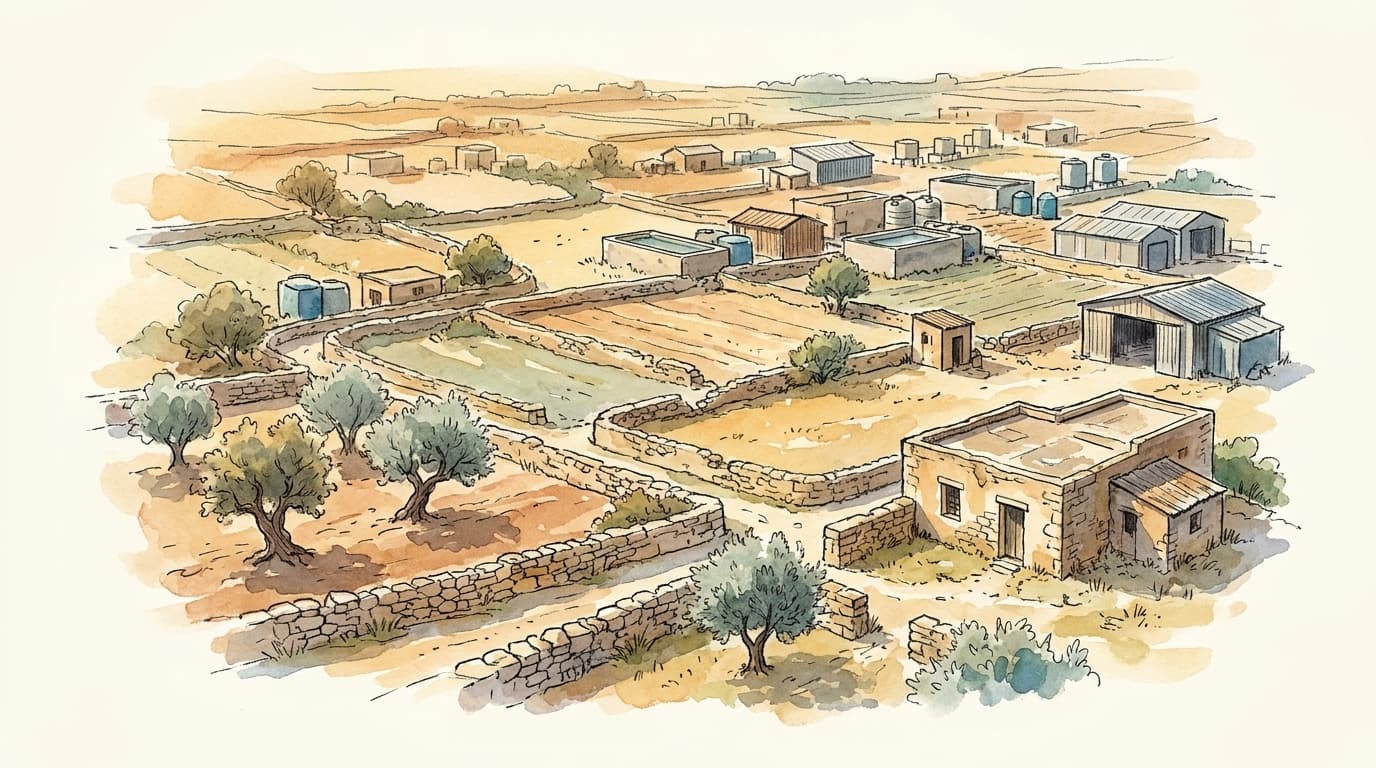
Malta's countryside is seeing an unprecedented wave of development applications. Reservoir applications have gone from 75/year (2000) to 762/year (2025) — a 10x increase. Rubble wall applications have increased 7x. Agricultural applications have the lowest approval rate of any major category at just 62.5%, yet their volume has doubled since 2013. The countryside is being built on, and the planning system is struggling to say no.
Key findings
Rural development indicators over time
| Year | Agricultural | Farm | Reservoirs | Rubble walls |
|---|---|---|---|---|
| 2000 | 143 | 87 | 75 | 38 |
| 2005 | 196 | 137 | 154 | 45 |
| 2010 | 117 | 77 | 146 | 73 |
| 2013 | 50 | 52 | 69 | 41 |
| 2016 | 228 | 135 | 276 | 136 |
| 2018 | 226 | 160 | 403 | 193 |
| 2020 | 398 | 167 | 534 | 287 |
| 2022 | 345 | 133 | 501 | 254 |
| 2024 | 277 | 101 | 573 | 266 |
| 2025 | 225 | 105 | 762 | 224 |
Reservoirs have surged relentlessly — 762 applications in 2025 alone. Rubble walls went from 38/year to 268/year. These are the building blocks of rural development: a reservoir justifies agricultural use, a rubble wall defines a boundary, and together they establish a physical presence on the land.
Approval rates: the countryside fights back
| Category | Applications | Approval rate |
|---|---|---|
| Agricultural | 5,906 | 62.5% |
| Farm | 3,314 | 65.0% |
| Rural | 324 | 63.5% |
| Rubble walls | 2,155 | 81.2% |
| Reservoirs | 4,356 | 86.8% |
| Greenhouses | 362 | 79.9% |
Agricultural and farm applications are refused at nearly double the overall rate (62–65% vs ~85% overall). The countryside is the one area where the planning system regularly says no.
But there's a hierarchy of rural approvals: reservoirs (86.8%) and rubble walls (81.2%) — the infrastructure that enables development — get approved far more easily than the agricultural buildings themselves.
The reservoir as stepping stone
The reservoir explosion is notable. In 2025, there were 762 reservoir applications — nearly one for every 740 Maltese residents (population ~563,000). Reservoirs serve a legitimate agricultural purpose (water storage), but they also:
- Establish a physical structure on rural land
- Create a basis for future applications (stores, access roads, boundary walls)
- In some cases, provide the excavation needed for pools disguised as water features
The 86.8% approval rate for reservoirs, compared to 62.5% for agricultural buildings, suggests they may be the path of least resistance for establishing a presence on rural land.
The 2020 rural surge
The biggest single jump in rural applications came in 2020:
- Agricultural: 253 → 398 (+57%)
- Reservoirs: 414 → 534 (+29%)
- Rubble walls: 197 → 287 (+46%)
This coincides with COVID-19 lockdowns, when rural land became more attractive — for recreation, investment, or simply having outdoor space. The effect has persisted, with rural application volumes remaining well above pre-2020 levels.
Why this matters
Malta is one of the most densely populated countries in the world (~1,600 people/km²). Its remaining countryside and agricultural land are under intense pressure. The data shows a system where the tools of rural development — reservoirs, rubble walls — are approved at rates well above the agricultural structures they're ostensibly supporting. This creates an incremental path to development: first the reservoir, then the wall, then the store, then the extension — each step individually approved, collectively transforming rural land.
Media sources
- "Government policy admits PA rules are facilitating speculation on agricultural land" — MaltaToday. National Agricultural Policy explicitly states the 2014 ODZ rural-policy guidelines drive land speculation and fragmentation — matching the incremental-development thesis.
- "Recreational farmers call me a liar and insist their intention is agricultural" — Victor Borg / JournalismPlus. Investigative piece documenting reservoirs, walls, and rooms as the building blocks of countryside encroachment — direct corroboration of the reservoir-as-stepping-stone thesis.
- "Ruining another 41,370 square metres of agricultural land" — Malta Independent, 1 March 2026. Recent example of agricultural-land conversion under the planning system.
- "Over-development and abuse continue unchecked in Covid Malta — FAA" — Flimkien Għal Ambjent Aħjar. Corroborates the 2020 COVID-era surge in rural applications.