Fort Tigné
The privatisation and return of a fortress
Summary
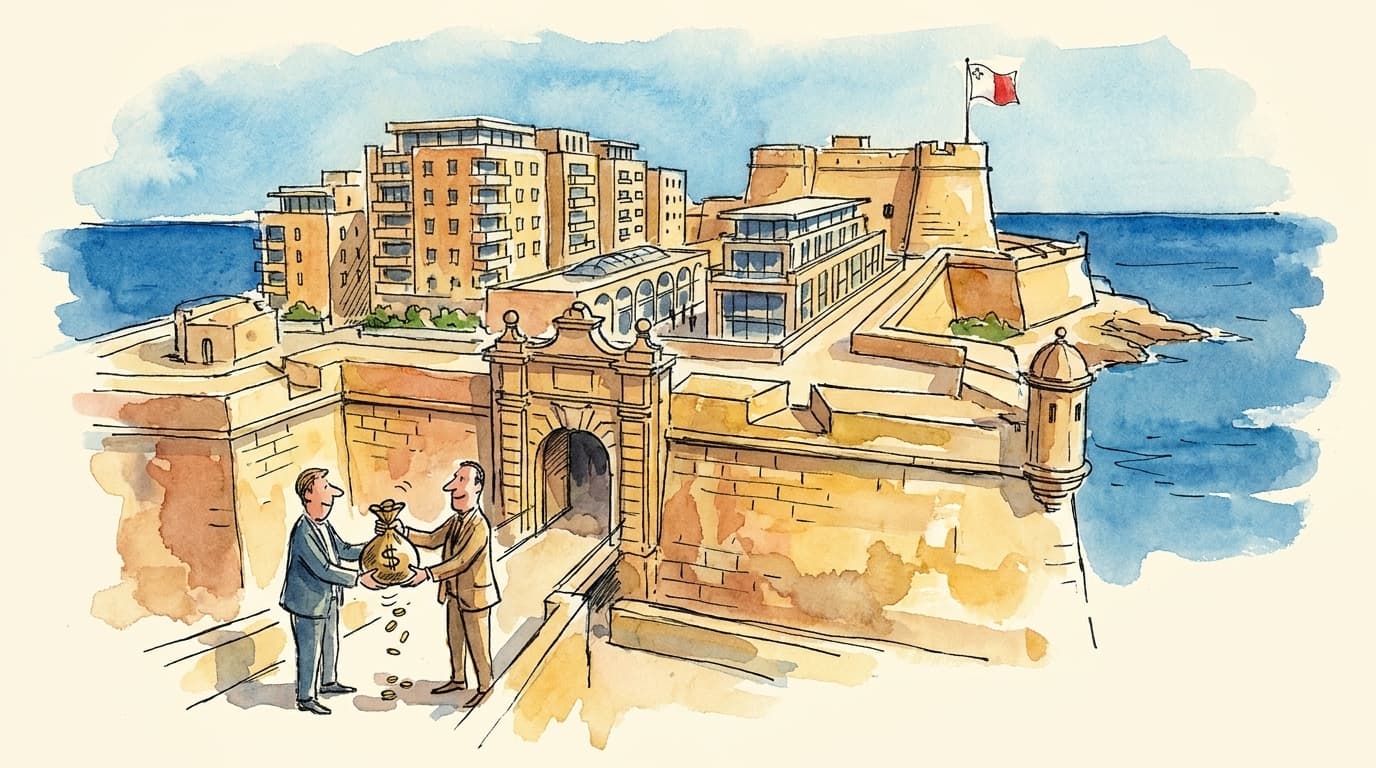
Fort Tigné, a 19th-century British coastal fortification on Sliema's waterfront, generated 783 planning applications in the database — more than any other fortification in Malta. The overwhelming majority relate not to the fort itself but to the massive MIDI plc development that grew around it: Tigné Point, a luxury apartment and commercial complex that replaced the British military barracks with high-rise residential towers. After two decades of private development, the fort was nearly transferred to developer J Portelli Projects for €2.5 million before a public outcry led to a March 2026 government deal to return Fort Tigné and Manoel Island to State control — at a cost to the taxpayer of up to €47.3 million.
Key findings
- 783 cases in the database reference the Tigné area — by far the highest caseload of any Maltese fortification
- The vast majority are individual apartment modifications, sanctioning, and minor works within the Tigné Point residential complex — the fort is buried under a mountain of domestic planning noise
- MIDI plc holds a 100% approval rate across its directly attributed fortification applications
- Major applications include the construction of Tigné Mansions, Tigne Palace, Fort Cambridge apartments, and the Fortina SPA Resort — all built on or adjacent to the former military site
- 81 major applications specifically mention restoration, demolition, hotel, or tower works in the Tigné area
From fortress to luxury apartments: the timeline
| Period | What happened |
|---|---|
| Pre-2000 | British barracks and Fort Tigné intact; area includes military heritage structures |
| 2000–2005 | MIDI plc secures development concession; master plan for Tigné Point approved |
| 2005–2015 | British barracks demolished; high-rise apartment towers built; Fort Tigné restored externally (2008) but remains in private hands |
| 2015–2025 | Continued apartment sales and modifications; 783 planning applications filed |
| Jan 2026 | Din L-Art Ħelwa (heritage NGO) makes offer to MIDI to "secure Fort Tigné for the nation" |
| Mar 2026 | Government agrees to return Fort Tigné and Manoel Island to State; MIDI receives €43–47.3 million; fort to be entrusted to Heritage Malta |
The development footprint
The planning database shows what replaced the military heritage: apartment blocks named Tigne Mansions, Tigne Palace, Fort Cambridge, the Fortina SPA Resort, commercial units including a SPAR supermarket, restaurants, and cafés. The fort itself — restored externally in 2008 — sat within this commercial matrix as an unused curiosity until the 2026 deal.
The MIDI approval pattern
MIDI plc applications in the database show a 100% positive decision rate. While some of these are routine (minor modifications to already-approved developments), the pattern is notable: the company that privatised a fortification site never received a refusal.
Why this matters
Fort Tigné is the starkest case of fortification privatisation in Malta's planning database. The 783 applications tell the story of a military heritage site absorbed into a luxury development, where the fort itself became a footnote to hundreds of apartment sanctioning cases. The March 2026 reversal — returning the fort to State control — came only after NGO pressure and at a cost of tens of millions in public funds. The planning data shows how the system facilitated this: approving the barracks demolition, the high-rise construction, and hundreds of subsequent modifications without a single refusal for the lead developer. The question the data raises is whether the €47.3 million buyback could have been avoided had the planning system been more protective in the first place.
Media sources
- "MIDI says it will receive €43 million as Manoel Island and Fort Tigné return to State" — Malta Independent, 17 March 2026. Corroborates the €47.3M / €43M figures cited in the story.
- "Agreement reached for Manoel Island, Fort Tigne to return to the government" — Malta Independent, 16 March 2026. Confirms the March 2026 government deal.
- "Din L-Art Ħelwa makes direct offer to MIDI to secure Fort Tigné 'for the nation'" — Malta Independent, 13 January 2026. Confirms the NGO €2.5M offer cited in the story timeline.
- "MIDI shareholders approve €43 Million Deal To Hand Back Manoel Island And Fort Tigné" — Lovin Malta. Shareholder ratification confirmation.